Ozempic in everyday life: appetite, meals and side effects
Ozempic questions about appetite, meals, nausea and everyday routines, with US product differences, warning signs and clearly sourced reader experiences.
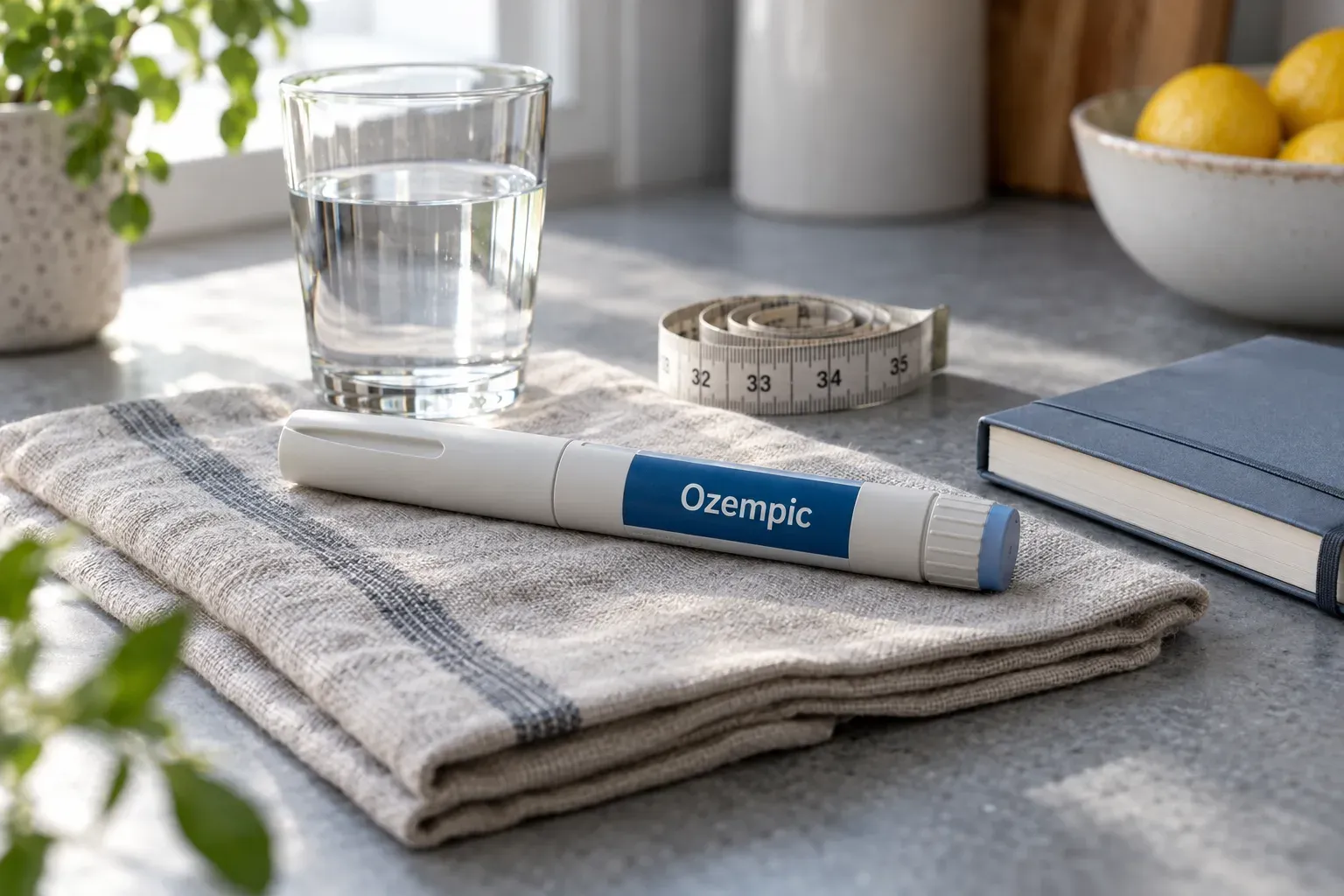
The pen comes with instructions. Your first dinner invitation doesn’t. How hungry will you be? What if the nausea kicks in halfway through? And how much should a stranger’s glowing review, or their miserable week, shape what you expect?
Ozempic is semaglutide, a medicine for type 2 diabetes and a few other specific uses. It can change your appetite and your stomach, and that shows up in everyday life. Your blood sugar and other health goals still need their own follow-up.
Everything below is about US products and access. Where a safety update comes from elsewhere, it says so; products, approvals and instructions differ between countries.
What might change at mealtimes?
Your usual portion might suddenly look huge, or a favorite meal might lose its appeal. It varies a lot from person to person. Eating less isn’t a target to push as far as you can.
Semaglutide is a GLP-1 receptor agonist. It helps your body release insulin and hold back glucagon when blood sugar rises, it can take the edge off your appetite, and it slows down how fast your stomach empties. That’s why blood sugar, hunger and stomach symptoms often change together. It doesn’t mean every stomach symptom is harmless.
The US injection label covers type 2 diabetes and some heart and kidney risk uses. It is not approved for type 1 diabetes. Semaglutide products for weight loss have their own uses and instructions, and a diabetes product isn’t interchangeable with them. US injection label
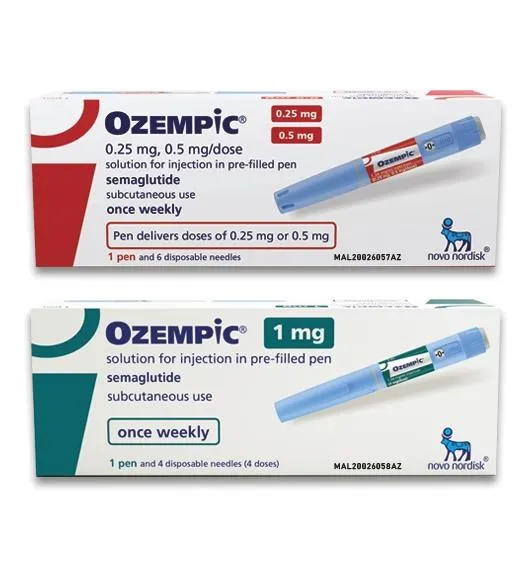
Injection or tablets? Start with the exact product
As of October 2026, the US labels include:
| Product | How it’s taken | Why it matters |
|---|---|---|
| Ozempic injection | Once a week | The dose goes up in steps, to as much as 2 mg for some people; your starting dose is a warm-up, not something to compare with someone else’s maintenance dose |
| Rybelsus | Daily tablet, 3, 7 or 14 mg | How to take it and how to switch are specific to this product |
| Ozempic tablets | Daily tablet, 1.5, 4 or 9 mg | The current US name after an FDA naming change; the milligrams don’t match Rybelsus one for one |
For those tablets, the US label says to take them in the morning on an empty stomach with water, then wait at least 30 minutes before eating, drinking or taking other tablets. Tablet milligrams can’t be compared with an injection dose. Don’t switch, combine or reschedule them yourself. Current oral label, FDA naming-change approval
Less appetite, more questions
A dinner out doesn’t have to turn into a battle with your plate. A smaller serving, a slower pace and foods you can face all help. Being able to eat and drink matters too; skipping a meal isn’t automatically a win.
Keep a quick note of symptoms, dose changes, how much you managed to eat and drink, and your glucose readings if your team asked for them. That beats comparing your first few weeks with a review that never mentions the dose, the other medicines or why the person was taking it.
On its own, semaglutide carries a different low-blood-sugar risk from a combination that includes insulin or a sulfonylurea. Tell your team about all your diabetes medicines before you change how much you eat or how you take them. Semaglutide injection patient information
Dinner shouldn’t be a test of how little you can get away with. Eating on Ozempic has easy meal ideas, where to get nutrition help, and why other users’ advice only goes so far.
Nausea and constipation: what to ask your team
Nausea, vomiting, diarrhea, constipation and stomach pain are all listed side effects. What matters is how they’re affecting your day. Can you keep fluids down? Are you managing meals? Did it start after a dose increase, or did something else change? US patient information
Talk portions and fluids with them. Before you reach for a laxative, check it’s OK with your conditions and the rest of your pills; “a forum said it worked” isn’t that check, least of all when you’re in pain or being sick. Still rough weeks later? Then the next dose step may need to wait.
When to get help quickly
Call your care team soon if you keep vomiting or can’t keep fluids down. Dehydration can harm your kidneys. Severe or lasting stomach pain, especially with vomiting, needs urgent help, not a diagnosis from a review site. Semaglutide patient information
The US product information also covers pancreatitis, gallbladder problems, diabetic eye complications and serious allergic reactions. Its thyroid warning means you shouldn’t take it if you or your family have had medullary thyroid cancer or MEN2; the animal findings behind that don’t mean everyone who takes it gets thyroid cancer. Tell your prescriber about your own and your family’s history. US injection label
Take eye symptoms seriously. In 2025 the EMA concluded that NAION, a problem with the optic nerve, is a very rare side effect of semaglutide. It’s different from diabetic eye disease. Get urgent help for sudden loss of vision or a big new change in your sight. EMA assessment
Tell the team doing your anesthesia or procedure that you take a GLP-1 medicine. Because your stomach empties more slowly, it can matter under general anesthesia or deep sedation. They’ll tell you how to prepare; don’t invent your own break from the medicine. US injection label
On mental health, the FDA’s January 2026 review found no increased risk of suicidal thoughts or behavior with GLP-1 medicines. One person’s story can’t prove the medicine caused something. New mental-health symptoms still deserve care, and if you’re in danger or thinking of harming yourself, get urgent help. FDA evaluation
What people ask on Reddit
Two threads show why everyday experiences are worth reading, even though they can’t tell you your odds of a benefit or a side effect.
- In a thread about nausea and struggling to eat, the poster has little appetite and isn’t sure what to eat. The replies range all over the place, with plenty of suggested remedies. The real question for your team is how to keep eating and manage the symptoms, not which commenter has the right dose or supplement.
- In a thread about “food noise” coming back, the poster is still losing weight but worried that food thoughts have returned. That doesn’t mean the treatment has stopped working. Appetite, blood sugar, weight and the reason for the prescription are separate things to look at.
Those are our summaries of what strangers posted. Their medical backgrounds are unknown to us, and a thread can be edited or deleted tomorrow.
The lesson is to bring your own notes: what you can eat and drink, which symptoms get in the way, and what your treatment is meant to improve. Don’t copy dose splitting, pen-click math or dose-increase tips from a thread.
What the kidney trial tells us
The FLOW trial followed 3,533 people with type 2 diabetes and chronic kidney disease, who took either semaglutide 1 mg a week or a dummy injection on top of their usual care. Over a median of 3.4 years, the main outcome happened to 331 of 1,767 people on semaglutide and 410 of 1,766 on the dummy: roughly 18.7% versus 23.2%, about 4.5 percentage points apart.
That outcome bundled together serious kidney decline or failure and deaths from kidney or heart causes. The trial stopped early after a planned check, and Novo Nordisk paid for it. It supports a benefit for people like those studied. It doesn’t mean everyone on semaglutide cuts their risk by 4.5 points, and it wasn’t a weight-loss trial. Perkovic and colleagues, NEJM 2024
The question to take away: which outcome are we trying to improve for me, and how will we check? Your weight is only part of the answer.
Storage, travel and getting a prescription
For the US injection pen, the label allows 56 days after first use, kept in the fridge or at room temperature as it describes. Keep it in that range, don’t freeze it, and never share a pen. That 56-day rule doesn’t apply to tablets or every semaglutide product. Pen instructions
Before a trip, show the pharmacist what you’ll be taking and ask about the journey, temperature limits and time zones. Write the plan down before you pack; a friend’s pen rules may not fit your tablets or a spare unopened supply.
If you miss a dose, follow the instructions for your exact product, because weekly injections and daily tablets have different rules. Ask your pharmacist to write the plan on your medicine list, along with the dose steps and storage limits.
A US prescription should come with a proper look at why you need it, your other medicines, your history and a follow-up plan. If you buy online, check the pharmacy’s state license and the FDA’s safety tips. FDA BeSafeRx
Questions for your next appointment
- Which exact product am I on, and what’s it for in my case?
- What are we measuring, and when?
- Which symptoms mean I should call before the next dose or increase?
- How does it fit with my other diabetes medicines, my meals and any planned procedures?
- What’s plan B if it’s too expensive or too hard to tolerate?
For the food and routine questions that come up between appointments, see eating on Ozempic when your appetite changes. Keep the treatment goal in mind before you judge the medicine by one meal or one stranger’s review.
Sources
8 sources
Checked in October 2026.