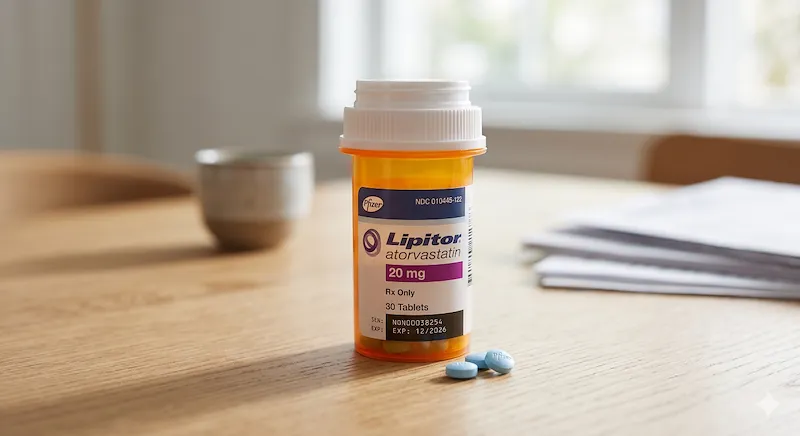
Lipitor / Atorvastatin: Clinical Guide
This document provides educational information. Consult a registered medical professional before starting or changing any medication regimen.
High cholesterol causes atherosclerosis, a condition where plaque hardens in the artery walls and blocks blood flow. This buildup leads directly to heart attacks and strokes. Doctors prescribe Lipitor (atorvastatin) to lower blood lipids, keep blood vessels flexible, and reduce cardiovascular risk.
Quick Reference: Lipitor / Atorvastatin
| Category | Patient Action |
|---|---|
| Daily Dose | Swallow the tablet whole with a glass of water. Do not crush or chew it. |
| Timing | Take the pill at the same time every day to maintain steady blood levels. |
| Food & Drink | Take with or without food. Eat a small snack with the pill if you experience stomach pain. |
| Missed Pill | Take a missed dose the moment you remember. Skip the pill if your next scheduled dose is near. Never take two pills at once. |
| Strictly Avoid | Remove grapefruit and grapefruit juice from your diet. It causes toxic drug levels and muscle damage. |
| Danger Signs | Seek immediate emergency medical help for severe muscle pain, dark tea-colored urine, yellowing skin/eyes, or facial swelling. |
| Lab Work | Complete your scheduled blood tests. Your doctor needs these to check your liver function and lipid panel. |
The Mechanism of Action
Your liver produces the cholesterol your body needs to function. Atorvastatin interrupts this internal production process.
The drug follows a clear biological pathway:
- Enzyme Inhibition: Atorvastatin blocks HMG-CoA reductase, the primary enzyme your liver uses to synthesize cholesterol.
- Production Drop: Your liver stops manufacturing new cholesterol.
- Receptor Activation: To satisfy its own need for cholesterol, the liver creates more receptors on its surface.
- Blood Clearance: These new receptors pull existing low-density lipoprotein (LDL) out of your bloodstream, dropping your overall levels and slowing plaque buildup.
Clinical Outcomes
Lipitor provides three main health outcomes:
- Improves Lipid Profiles: Lowers LDL (“bad” cholesterol) and triglycerides. Raises high-density lipoprotein (HDL, or “good” cholesterol).
- Protects the Heart: Lowers the incident rate of myocardial infarctions (heart attacks) and ischemic strokes.
- Preserves Arteries: Stops the progression of atherosclerosis.
Pre-Treatment Checklist
Discuss your complete medical history with your doctor before taking atorvastatin.
- Disclose Conditions: Tell your provider about any history of liver disease, kidney dysfunction, or unexplained muscle pain.
- List Medications: Provide a full list of your current prescriptions, over-the-counter drugs, and supplements.
- Pregnancy Warning: Do not take Lipitor if you are pregnant, planning to become pregnant, or breastfeeding.
- Limit Alcohol: Mixing high amounts of alcohol with Lipitor causes severe liver damage.
- Change Your Diet: Cut saturated fats from your meals to boost the medication’s effect.
Dosing and Administration
Doctors tailor your dosage based on your baseline blood tests and cardiovascular risk factors.
- Starting Dose: Patients start on 10 mg to 20 mg daily. Doctors adjust the dose up or down depending on follow-up lab results.
- Timing: Take the pill at the exact same time every day to keep blood levels stable.
- Food: Take the pill with or without food. Eat a small meal with the dose if you experience an upset stomach.
- Method: Swallow the tablet whole with a glass of water. Do not crush or chew it.
- Missed Doses: Take a missed dose the moment you remember. Skip the pill if your next scheduled dose is near. Never take two pills at once.
Side Effects and Risks
Monitor your body for adverse reactions when starting statin therapy.
Common Side Effects
- Mild muscle aches
- Nausea, diarrhea, or constipation
- Headaches
Severe Risks
Require immediate emergency medical attention:
- Rhabdomyolysis: A rapid breakdown of muscle tissue. Watch for severe muscle weakness, intense pain, and dark, tea-colored urine.
- Hepatotoxicity (Liver Damage): Watch for persistent fatigue, loss of appetite, and jaundice (yellowing of the skin or eyes).
- Allergic Reactions: Watch for rashes, severe itching, and swelling of the face or throat.
Drug and Food Interactions
- Grapefruit: Avoid grapefruit and grapefruit juice. Grapefruit alters the enzymes that process Lipitor, leading to toxic drug levels in the blood and triggering muscle damage.
- Prescriptions: Antibiotics, antifungals, and other cholesterol-lowering medications interfere with Lipitor.
Monitoring and Follow-Up
Your doctor will order periodic blood tests to check your lipid panel and liver enzyme levels. Track any side effects in a log and bring it to your appointments.
Support the medication by walking, cycling, or swimming for 150 minutes a week and maintaining a healthy body weight.
FAQ
How long does it take to see results? Blood tests show changes within two to four weeks.
Can I take Lipitor with food? Yes.
What if I miss a dose? Take it when you remember. Do not double the dose.
Are there foods to avoid? Avoid grapefruit and grapefruit juice entirely.
Is Lipitor safe during pregnancy? No.
Glossary
- Atorvastatin: The active chemical ingredient in Lipitor.
- HMG-CoA Reductase: The liver enzyme responsible for cholesterol production.
- LDL (Low-Density Lipoprotein): Plaque-forming cholesterol.
- HDL (High-Density Lipoprotein): Cholesterol that transports LDL out of the blood.
- Triglycerides: A type of blood fat that increases heart disease risk.
- Atherosclerosis: The hardening and narrowing of arteries due to plaque.
- Rhabdomyolysis: A severe medical condition involving rapid muscle tissue breakdown.
Sources
- FDA (U.S. Food and Drug Administration): Approved uses and safety warnings for Lipitor.
- Mayo Clinic: Clinical guidelines on statin medications.
- American Heart Association: Treatment protocols for cardiovascular health.
- MedlinePlus: Drug interaction data for atorvastatin.
- PubMed: Clinical trial data on Lipitor efficacy.