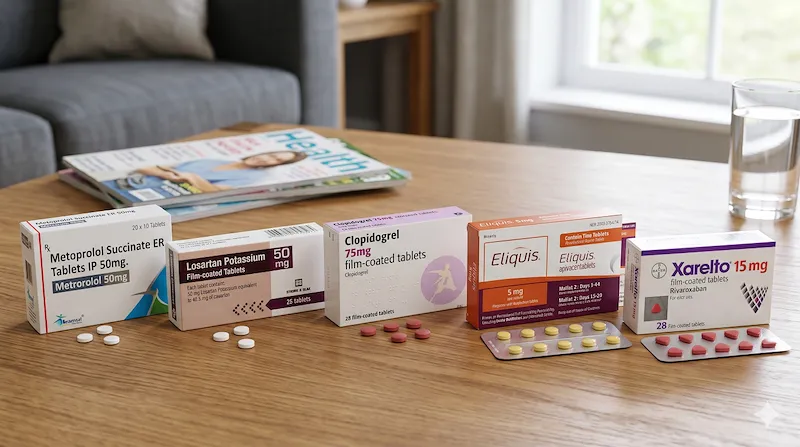
This medical analysis provides educational information aggregated from Australian medical archives, the Therapeutic Goods Administration (TGA), public health guidelines, and clinical forums. The content does not replace professional medical advice, diagnosis, or treatment. Patients must consult a certified medical practitioner before altering any medication regimen.
The Landscape of Cardiovascular Risk
Cardiovascular medications form the foundation of modern medical therapy for heart disease. Healthcare professionals routinely prescribe these drugs to stabilize blood pressure, regulate heart rhythms, and prevent life-threatening blood clots. The sheer volume of prescriptions presents a massive clinical challenge. Medication harm from cardiovascular therapies accounts for roughly 20 percent of all hospital medication errors. In older adult populations, this figure approaches 50 percent.
Australian clinical safety models traditionally use the acronym APINCH to highlight high-risk drugs like antimicrobials and insulin. Recent pharmacological studies argue for adding a “C” for cardiovascular medications. The sheer potency of these drugs demands exact patient compliance. Understanding how Metoprolol, Losartan, Clopidogrel, Rivaroxaban, and Apixaban function helps mitigate these inherent safety risks.
Each medication targets a highly specific physiological pathway. Beta-blockers slow racing hearts. Angiotensin receptor blockers relax tight blood vessels. Antiplatelets and anticoagulants stop blood from forming solid blockages. The medical community relies on these five generic drugs daily to manage acute recovery and chronic illness.
Australian Brand Names and Subsidies
The Therapeutic Goods Administration (TGA) governs the approval and sale of all medicines across Australia. Pharmaceutical developers release new drugs under proprietary brand names. When original patents expire, competing manufacturers produce generic versions containing the identical active ingredient. Generics act exactly the same way in the body as the original branded versions.
The Pharmaceutical Benefits Scheme (PBS) drastically lowers the cost of these medicines for Australian residents. As of recent updates, general patients pay a maximum co-payment of $25. per prescription. Medicare concession cardholders pay $7. . Pharmacies stock numerous brands for each cardiovascular generic.
The Five Generic Profiles
Metoprolol belongs to the beta-blocker family. Australian pharmacies commonly dispense it under the brand names Betaloc, Minax, and Toprol XL. Manufacturers like Apotex also produce Apo-Metoprolol.
Losartan functions as an angiotensin II receptor antagonist. Doctors most frequently prescribe it under the original brand name Cozaar, or the generic alternative Cozavan.
Clopidogrel is an antiplatelet medication. The most recognized brand name is Plavix. Sanofi-Aventis also produces Coplavix, which combines Clopidogrel with aspirin in a single tablet. Various generic options include Clopidogrel Sandoz and Apo-Clopidogrel.
Rivaroxaban acts as a direct oral anticoagulant. Bayer Australia markets the original drug as Xarelto. The Australian market now supports several generic equivalents, including Xaremed, Rivoxa, and Rivaroxaban Sandoz.
Apixaban is also a direct oral anticoagulant. Pfizer Australia distributes it almost exclusively under the brand name Eliquis. Apixaban lacks the wide generic availability seen with the other four medications. It remains one of the highest-cost drugs for the Australian government, requiring over $346 million in annual PBS subsidies.
Table 1: The Quick Snapshot
| Generic Name | Common Brand (Local) | Typical Dose Frequency | Generic Available |
|---|---|---|---|
| Metoprolol | Betaloc, Minax | 1 to 2 times daily | Yes |
| Losartan | Cozaar | 1 to 2 times daily | Yes |
| Clopidogrel | Plavix | Once daily | Yes |
| Rivaroxaban | Xarelto | Once daily | Yes |
| Apixaban | Eliquis | Twice daily | No |
Patients sometimes encounter “brand premiums” at the pharmacy counter. Certain manufacturers charge an extra cash fee for their specific branded box. This premium sits on top of the standard PBS co-payment and does not count toward the PBS Safety Net. Choosing a generic medicine avoids this extra financial charge entirely.
Mechanisms of Action Explained
Metoprolol: Removing the Adrenaline Response
Metoprolol selectively targets beta-1 adrenergic receptors located directly on the heart muscle. The body naturally releases hormones like adrenaline and noradrenaline during stress or physical activity. These chemicals bind to beta receptors, telling the heart to beat faster and pump harder.
Metoprolol blocks these specific receptors. Adrenaline can no longer attach to the heart tissue. Think of Metoprolol as taking the foot off the accelerator pedal. The heart beats slower and with less violent force. The heart muscle requires far less oxygen to survive, protecting it from damage after a heart attack.
Losartan: Widening the Arteries
Losartan blocks a completely different chemical pathway. The human body produces a substance called angiotensin II. This chemical forces blood vessels to tighten and narrow, which drives blood pressure upward.
Losartan acts as an angiotensin II receptor blocker (ARB). It physically stops the chemical from attaching to the walls of the blood vessels. The blood vessels relax and widen in response. Imagine swapping a narrow garden hose for a wide fire hose. The fluid volume remains the same, but the internal pressure drops significantly.
Clopidogrel: Creating Slippery Blood Cells
Clopidogrel manages tiny blood cells called platelets. Platelets naturally clump together to form scabs over open wounds. Inside diseased or hardened arteries, these same clumps trigger catastrophic heart attacks or strokes.
The drug is an inactive prodrug. The liver must process Clopidogrel using specific enzymes to activate it. Once activated, Clopidogrel permanently blocks the P2Y12 receptor on the surface of the platelets. The platelets lose their sticky exterior. The cells slide past one another without clumping, acting much like a non-stick cooking pan.
Rivaroxaban and Apixaban: The Molecular Scissors
Rivaroxaban and Apixaban treat blood clotting from a completely different angle. The body builds solid blood clots using a complex, multi-step chemical chain reaction. A specific protein called Factor Xa acts as a critical link in this chain.
Both drugs are direct factor Xa inhibitors. They act like molecular scissors, cutting this exact protein out of the sequence. The body can no longer weave the final fibrin protein net required to trap red blood cells. The blood remains thin enough to pass through the heart and lungs safely.
TGA Approved Indications
The Therapeutic Goods Administration rigorously evaluates clinical trial data before allowing a pharmaceutical company to advertise a medicine for a specific disease.
Metoprolol holds official approval to treat high blood pressure and prevent long-term angina chest pain. Doctors prescribe it immediately following a confirmed heart attack to protect the damaged tissue. The TGA also approves oral Metoprolol tablets for the prevention of chronic migraine headaches. Intravenous Metoprolol treats abnormally fast heart rhythms, including atrial fibrillation and supraventricular tachycardia.
Losartan holds approval for the treatment of hypertension. It serves a secondary protective role in diabetic patients. The TGA approves Losartan to delay the progression of kidney disease in hypertensive type 2 diabetics who leak protein into their urine.
Clopidogrel prevents atherothrombosis. Specialists prescribe it to patients who have already suffered a stroke or heart attack. It protects patients diagnosed with peripheral arterial disease, a condition causing severe leg pain due to blocked arteries. Clopidogrel remains the standard treatment for acute coronary syndrome, protecting patients whether or not they undergo surgical stent placement.
Rivaroxaban and Apixaban share virtually identical clinical approvals. They prevent strokes and systemic embolisms in adults suffering from non-valvular atrial fibrillation. They also prevent deep vein thrombosis and pulmonary embolisms following major elective hip or knee replacement surgeries. Both DOACs actively treat existing deep vein blood clots.
Off-Label Prescribing Realities
Physicians frequently practice “off-label” prescribing. They use a registered medication to treat a condition not listed on the official TGA documentation. Drug companies rarely spend the millions of dollars required to register new uses for old, off-patent generic drugs.
Metoprolol and Performance Anxiety
Psychiatrists and general practitioners routinely prescribe Metoprolol off-label to manage situational anxiety. During a panic attack or a public speech, the body dumps adrenaline into the bloodstream. Metoprolol blocks this physical adrenergic response. It stops the rapid heartbeat, the sweating palms, and the visible trembling.
The drug does not treat the cognitive or emotional source of the anxiety. It offers zero psychological relief from intrusive thoughts or chronic worry. Doctors prefer it for short-term situational relief because it lacks the severe addiction risks associated with benzodiazepines like Xanax or Valium.
Losartan and Marfan Syndrome
Marfan syndrome is a genetic connective tissue disorder. Patients suffer from a dangerous progressive widening of the aortic root. Without treatment, the aorta eventually tears, causing sudden death.
Losartan functions as a potent off-label treatment for these patients. A landmark 2006 study by Habashi revealed that Losartan inhibits a specific growth factor called TGF-β1, preventing structural changes in the aorta. The COMPARE human trial demonstrated a significantly lower rate of aortic root dilation in patients taking Losartan over a three-year period. A Pediatric Heart Network study confirmed that conventional doses of Losartan worked just as well as high-dose beta-blockers for protecting the aortas of young patients.
DOACs in Pediatric Populations
Using direct oral anticoagulants in patients under 18 years of age is strictly off-label. The TGA currently lacks robust pediatric safety data for Apixaban and Rivaroxaban. Medical specialists must obtain informed consent from legal guardians and carefully weigh the bleeding risks before prescribing these to children.
Table 2: Efficacy and Safety Profile
| Medication Name | Key Benefit / Strength | Most Common Side Effect |
|---|---|---|
| Metoprolol | Rapidly lowers heart rate and oxygen demand. | Fatigue and temporary exercise intolerance. |
| Losartan | Protects kidney function in diabetic patients. | Dizziness and elevated potassium levels. |
| Clopidogrel | Highly effective post-stent clot prevention. | Easy bruising and prolonged minor bleeding. |
| Rivaroxaban | Convenient once-daily dosing schedule. | Minor nosebleeds and gum bleeding. |
| Apixaban | Stable blood levels with lower GI bleeding risk. | Minor nosebleeds and bruising. |
Efficacy: Speed, Potency, and Clinical Outcomes
Cardiovascular drugs display vast differences in their pharmacokinetic profiles. These biological differences dictate how strongly and quickly a drug alters the human body.
Metoprolol works fast. Intravenous injections stabilize dangerous cardiac dysrhythmias in minutes. Oral tablets begin lowering blood pressure and heart rate within just a few hours. Losartan operates on a longer timeline. Achieving maximum blood pressure control with Losartan often requires days or weeks of consistent daily dosing.
When comparing Metoprolol and Losartan for general hypertension, both drugs reduce systolic and diastolic pressure effectively. The clinical difference lies in specific heart conditions. Metoprolol provides vastly superior benefits for improving left ventricular function following a major heart attack. Conversely, Losartan proves better at maintaining aortic function during heavy physical exercise in patients suffering from aortic regurgitation.
Apixaban Versus Rivaroxaban
The clinical comparison between Apixaban and Rivaroxaban reveals critical pharmacological differences. Rivaroxaban requires a single daily dose. Apixaban demands a strict twice-daily schedule.
Taking Rivaroxaban once a day creates massive fluctuations in the bloodstream. The drug hits a high peak concentration shortly after ingestion. It then drops to a very low trough concentration right before the next day’s dose. The peak-to-trough ratio for a 20mg dose of Rivaroxaban hits roughly 10.
Apixaban maintains much smoother blood levels. The twice-daily dosing schedule results in a peak-to-trough ratio of just 3. Apixaban experiences far less fluctuation and reduced variability in maximum concentration.
These distinct pharmacokinetic profiles directly influence patient outcomes. The American Geriatrics Society (AGS) updated their Beers Criteria in 2023 regarding these exact medications. The AGS officially changed the recommendation for Rivaroxaban in older adults from “use with caution” to “avoid” for long-term treatment. Network meta-analyses confirm that Rivaroxaban confers a noticeably higher risk of major gastrointestinal bleeding in elderly patients compared to Apixaban.
Side Effects and Patient Safety
Cardiovascular therapies routinely produce mild daily annoyances. They also carry rare, catastrophic risks that trigger strict regulatory warnings.
Common and Annoying Symptoms
Metoprolol aggressively limits the heart’s ability to respond to physical exertion. Patients frequently report severe fatigue, cold extremities, and exercise intolerance. Walking up a standard flight of stairs feels exhausting during the first few weeks of therapy. The body gradually adapts to the lowered heart rate, and these symptoms usually subside.
Losartan generally enjoys high patient tolerance. A small percentage of users report mild dizziness, weariness, or transient headaches.
The three blood thinners share identical daily nuisances. Clopidogrel, Rivaroxaban, and Apixaban disrupt the body’s natural healing mechanisms. Patients experience frequent, unsightly bruising from minor bumps. Tiny shaving cuts or paper cuts take significantly longer to stop bleeding. Minor nosebleeds and slight blood traces on a toothbrush are expected.
Rare but Serious Dangers
Metoprolol poses extreme danger to patients with chronic lung diseases. Beta-blockers can trigger severe bronchospasms, making it impossible to breathe. The drug also masks the physical symptoms of low blood sugar in diabetic patients. A diabetic crashing into hypoglycemia usually feels a racing heart and visible shaking. Metoprolol blocks these warning signs entirely, creating a silent medical emergency.
Losartan causes severe electrolyte imbalances. The drug reduces circulating levels of aldosterone, causing the kidneys to retain potassium. This condition, known as hyperkalemia, disrupts the electrical timing of the heart and causes fatal arrhythmias. The TGA strictly contraindicates Losartan for pregnant women. Taking drugs that act on the renin-angiotensin system during the second or third trimester causes severe fetal toxicity, skull deformations, and neonatal death.
The Risk of Hemorrhage
All blood thinners carry a fundamental risk of fatal internal hemorrhage. The medical community monitors patients closely for bleeding inside the skull or the gastrointestinal tract. Patients must seek immediate emergency care if they observe dark, tarry bowel motions, blood in the urine, or vomit resembling coffee grounds.
Apixaban and Rivaroxaban carry stark warnings regarding spinal procedures. Patients receiving epidural catheters or spinal anesthesia face a high risk of developing a spinal hematoma. A blood clot expanding inside the spinal column easily causes permanent, irreversible paralysis. Doctors must never remove an epidural catheter until at least two full half-lives of the drug have passed, ensuring the anticoagulant effect is at its absolute lowest.
Post-marketing reports reveal a new condition called anticoagulant-related nephropathy (ARN). Excessive doses of Apixaban can trigger acute kidney injury, presenting as severe blood in the urine and dramatic swelling in the legs.
Drug Interactions and Lifestyle Rules
Patients taking cardiovascular medications must strictly manage their diets, alcohol intake, and over-the-counter pill consumption.
Dietary Restrictions
Rivaroxaban relies heavily on food for proper biological absorption. Patients prescribed the standard 15mg or 20mg tablets must swallow the medication alongside a substantial meal. Taking these higher doses on an empty stomach drastically reduces the amount of chemical that enters the bloodstream, leaving the patient completely unprotected against a stroke. Apixaban functions perfectly with or without food.
Losartan patients face strict potassium limits. Doctors explicitly forbid the use of potassium-enriched salt substitutes. Combining a salt substitute with an ARB pushes blood potassium levels into the toxic range rapidly. Patients must also avoid drinking grapefruit juice while taking Losartan.
The Impact of Alcohol
Alcohol interacts violently with blood pressure medications. Ethanol acts as a central nervous system depressant. Mixing alcohol with Metoprolol or Losartan forces blood pressure to drop far too low, causing severe dizziness, fainting, and traumatic falls.
Chronic alcohol consumption damages the heart muscle directly and triggers alcoholic cardiomyopathy. Even moderate alcohol use significantly increases the risk of developing atrial fibrillation. Combining alcohol with Clopidogrel, Apixaban, or Rivaroxaban heavily irritates the stomach lining. This drastically magnifies the risk of severe gastrointestinal bleeding.
Interactions with Everyday Medicines
Clopidogrel features one of the most dangerous over-the-counter drug interactions in modern pharmacology. Clopidogrel is completely inactive in its pill form. The liver relies on an enzyme called CYP2C19 to convert the prodrug into an active blood thinner.
Millions of people take omeprazole (Nexium) for daily heartburn. Omeprazole completely blocks the CYP2C19 enzyme. Taking omeprazole at the same time as Clopidogrel reduces the active blood thinner concentration by 45 percent. The platelets retain their sticky exterior, and the patient remains at high risk for a massive heart attack. Medical guidelines urge patients to substitute omeprazole with pantoprazole, which does not block the vital liver enzyme.
Non-steroidal anti-inflammatory drugs (NSAIDs) like ibuprofen or naproxen pose severe risks across the board. NSAIDs blunt Losartan’s ability to lower blood pressure. Pairing NSAIDs with any blood thinner doubles the risk of occult gastrointestinal bleeding.
Dosage Rules and Kidney Function
The kidneys filter toxins and medications out of the bloodstream. When kidney function declines, cardiovascular drugs build up to toxic levels inside the body. Medical practitioners rely on a metric called creatinine clearance to measure exact renal efficiency.
The direct oral anticoagulants demand strict renal monitoring. The TGA officially contraindicates Rivaroxaban for any patient with a creatinine clearance below 15 mL/min. Apixaban requires slightly less renal clearance than Rivaroxaban. However, Australian product information still officially advises avoiding Apixaban if clearance drops below 25 mL/min.
Apixaban dosing requires specific mathematical adjustments. The standard dose for stroke prevention sits at 5mg twice daily. The doctor cuts the dose exactly in half (2. mg twice daily) if the patient meets at least two specific criteria: age 80 years or older, body weight under 60 kg, or a serum creatinine level exceeding 133 micromol/L.
Clopidogrel dosing remains highly standardized. The standard daily dose is a single 75mg tablet. During an acute heart attack, an emergency physician might administer a massive 300mg loading dose. This immediately shuts down platelet aggregation before the patient reaches the surgical suite.
Frequently Asked Questions
What should a patient do after missing a dose?
Skipping cardiovascular medications rapidly reverses their protective effects. If a patient misses a dose of Apixaban, they should take the tablet immediately if they remember within six hours of the scheduled time. If more than six hours have passed, the patient must completely skip the missed dose and resume the normal twice-daily schedule. A patient must never take a double dose to compensate for a forgotten pill.
Do blood thinners need to be stopped for dental work?
Patients frequently fear bleeding out in the dentist’s chair. Current Australian Dental Association guidelines recommend performing routine dental extractions and periodontal surgery without interrupting Clopidogrel, Apixaban, or Rivaroxaban. The catastrophic risk of suffering a stroke by pausing the medication far outweighs the minor nuisance of a prolonged gum bleed. Dentists control local oral bleeding easily with stitches and pressure.
Are there reversal agents for blood thinners?
Historically, treating a trauma patient on blood thinners proved difficult. Today, Australian hospitals stock specific chemical reversal agents for direct oral anticoagulants. Clopidogrel acts irreversibly. No chemical antidote exists to reverse its effects. Emergency doctors manage severe Clopidogrel bleeding by transfusing bags of fresh donor platelets into the patient.
Can a patient drink coffee while taking Metoprolol?
Caffeine aggressively stimulates the central nervous system, driving the heart rate upward. Metoprolol attempts the exact opposite, fighting to keep the heart slow and calm. Moderate coffee consumption rarely causes clinical harm. However, excessive caffeine forces the beta-blocker to work significantly harder, undermining the medication’s overall efficacy.
The Verdict on Patient Selection
Determining the correct cardiovascular regimen requires deep shared decision-making between the specialist and the patient. No single drug reigns supreme.
Metoprolol remains unparalleled for protecting damaged heart tissue immediately following a massive heart attack. It also serves double duty for patients suffering from chronic migraines. Losartan shines in hypertensive populations battling type 2 diabetes. Its ability to protect the delicate filtration systems of the kidneys makes it the definitive choice for diabetic nephropathy.
Selecting a blood thinner depends heavily on the specific disease state. Clopidogrel excels at protecting freshly implanted metallic stents in the coronary arteries. Direct oral anticoagulants have largely replaced older drugs like warfarin for managing atrial fibrillation, sparing patients the burden of weekly blood draws.
The choice between Rivaroxaban and Apixaban hinges on patient lifestyle and age. Rivaroxaban offers the undeniable convenience of a single daily pill, vastly improving patient adherence. However, the elderly population benefits heavily from Apixaban. The twice-daily dosing schedule creates a smoother, more stable drug concentration, measurably lowering the risk of life-threatening gastrointestinal bleeding.
A patient’s daily routine, kidney function, and underlying biological health ultimately dictate the final prescription.
Article-Specific Glossary
- Angioedema: A severe, rapid swelling beneath the skin’s surface, typically occurring around the lips, tongue, and throat, which can restrict airways and cause suffocation.
- Atrial Fibrillation: An irregular and frequently rapid heartbeat originating in the upper chambers of the heart, disrupting blood flow and drastically increasing the risk of forming a fatal clot.
- Creatinine Clearance: A diagnostic measurement derived from blood and urine tests. It determines exactly how efficiently the kidneys are filtering waste and medications out of the bloodstream.
- Off-label: The legal clinical practice where a physician prescribes a registered medication to treat a disease or condition that is not formally approved by the national therapeutic regulatory agency.
- Pharmacokinetics: The specialized branch of pharmacology dedicated to analyzing how the human body absorbs, distributes, breaks down, and ultimately excretes a specific chemical substance.
References
- Australian Government Psychiatric Drug Warnings – CCHR Australia, accessed April 18, 2026, https://cchr.org.au/australian-government-psychiatric-drug-warnings
- DOAC Guidelines – Direct Oral Anticoagulants – Clinical Excellence Commission, accessed April 18, 2026, https://www.cec.health.nsw.gov.au/__data/assets/pdf_file/0005/917807/DOAC-guidelines.pdf
- Patient harm from cardiovascular medications – PMC – NIH, accessed April 18, 2026, https://pmc.ncbi.nlm.nih.gov/articles/PMC8317255/
- Patient harm from cardiovascular medications – PubMed, accessed April 18, 2026, https://pubmed.ncbi.nlm.nih.gov/34367546/
- PBS co-payments | Cheaper medicines – Department of Health, Disability and Ageing, accessed April 18, 2026, https://www.health.gov.au/cheaper-medicines/pbs-co-payments
- Metoprolol-WGR Tablets – NPS MedicineWise, accessed April 18, 2026, https://www.nps.org.au/medicine-finder/metoprolol-wgr-tablets
- Metoprolol for anxiety: Efficacy and dosage – SingleCare, accessed April 18, 2026, https://www.singlecare.com/blog/metoprolol-for-anxiety/
- APO-Metoprolol Tablets – NPS MedicineWise, accessed April 18, 2026, https://www.nps.org.au/medicine-finder/apo-metoprolol-tablets
- losartan – Healthdirect, accessed April 18, 2026, https://www.healthdirect.gov.au/medicines/medicinal-product/aht,21198/losartan
- Plavix Tablets – NPS MedicineWise, accessed April 18, 2026, https://www.nps.org.au/medicine-finder/plavix-tablets
- Australian Public Assessment Report for Clopidogrel/Aspirin, accessed April 18, 2026, https://www.tga.gov.au/sites/default/files/auspar-coplavix.pdf
- APO-Clopidogrel Tablets – NPS MedicineWise, accessed April 18, 2026, https://www.nps.org.au/medicine-finder/apo-clopidogrel-bottle-tablets
- Clopidogrel Sandoz – NPS MedicineWise, accessed April 18, 2026, https://www.nps.org.au/medicine-finder/clopidogrel-sandoz-tablets
- Attachment: Product Information: Rivaroxaban – Therapeutic Goods Administration (TGA), accessed April 18, 2026, https://www.tga.gov.au/sites/default/files/auspar-rivaroxaban-191022-pi.pdf
- RIVAROXABAN – Pharmaceutical Benefits Scheme (PBS), accessed April 18, 2026, https://www.pbs.gov.au/medicine/item/2160q-2268j-2691p-9465e-9466f-9467g-9468h-9469j
- RIVAROXABAN – Pharmaceutical Benefits Scheme (PBS), accessed April 18, 2026, https://www.pbs.gov.au/medicine/item/2268J
- Eliquis – NPS MedicineWise, accessed April 18, 2026, https://www.nps.org.au/medicine-finder/eliquis-tablets
- Top 10 drugs 2023–24 – Australian Prescriber – Therapeutic Guidelines, accessed April 18, 2026, https://australianprescriber.tg.org.au/articles/top-10-drugs-2023%E2%80%9324.html
- Beta Blockers Mnemonic for Nursing and NCLEX – Pixorize, accessed April 18, 2026, https://pixorize.com/view/6512
- [Effect of metoprolol on the exercise tolerance in patients with stable angina pectoris (author’s transl)] – PubMed, accessed April 18, 2026, https://pubmed.ncbi.nlm.nih.gov/367865/
- Losartan (oral route) – Side effects & dosage – Mayo Clinic, accessed April 18, 2026, https://www.mayoclinic.org/drugs-supplements/losartan-oral-route/description/drg-20067341
- Clopidogrel AN Tablets – NPS MedicineWise, accessed April 18, 2026, https://www.nps.org.au/medicine-finder/clopidogrel-an-tablets
- Clopidogrel – StatPearls – NCBI Bookshelf, accessed April 18, 2026, https://www.ncbi.nlm.nih.gov/books/NBK470539/
- Antiplatelet vs. Anticoagulant Blood Thinners — 4 Things to Know – GoodRx, accessed April 18, 2026, https://www.goodrx.com/classes/anticoagulants/antiplatelet-vs-anticoagulant
- Association of Rivaroxaban vs Apixaban With Major Ischemic or Hemorrhagic Events in Patients With Atrial Fibrillation – PMC, accessed April 18, 2026, https://pmc.ncbi.nlm.nih.gov/articles/PMC8693217/
- Clopidogrel (Plavix) is NOT an Anticoagulant – Maine Stroke Alliance, accessed April 18, 2026, https://www.mainestroke.org/post/clopidogrel-plavix-is-not-an-anticoagulant
- Off-label prescribing, accessed April 18, 2026, https://australianprescriber.tg.org.au/articles/off-label-prescribing.html
- Metoprolol (Apo) – Healthdirect, accessed April 18, 2026, https://www.healthdirect.gov.au/medicines/brand/amt,123701000036106/metoprolol-apo
- Metoprolol – StatPearls – NCBI Bookshelf, accessed April 18, 2026, https://www.ncbi.nlm.nih.gov/books/NBK532923/
- Losartan (Apo) – Healthdirect, accessed April 18, 2026, https://www.healthdirect.gov.au/medicines/brand/amt,1003821000168102/losartan-apo
- COZAAR® – Healthdirect, accessed April 18, 2026, https://media.healthdirect.org.au/medicines/GuildLink_Information/54809/CMI/mkccozaa10221.pdf
- NOAC indications and PBS listings – NPS MedicineWise, accessed April 18, 2026, https://www.nps.org.au/professionals/anticoagulants/noac-indications-and-pbs-listings
- Xarelto – NPS MedicineWise, accessed April 18, 2026, https://www.nps.org.au/medicine-finder/xarelto-tablets
- Beta Blockers for Anxiety: Do They Really Work? – Talked, accessed April 18, 2026, https://www.talked.com.au/blog/beta-blockers-for-anxiety
- Metoprolol for Anxiety: Can This Beta-Blocker Help Your Symptoms? – PsychPlus, accessed April 18, 2026, https://psychplus.com/blog/metoprolol-for-anxiety/
- COMPARE and Pediatric Heart Network Investigator trials: Losartan finally validated in humans with Marfan, but much work remains! – PMC, accessed April 18, 2026, https://pmc.ncbi.nlm.nih.gov/articles/PMC4355511/
- New findings about why losartan is effective in treating Marfan syndrome may reshape our thinking about patient management | EurekAlert!, accessed April 18, 2026, https://www.eurekalert.org/news-releases/573851
- Losartan Shown to be Effective in the Treatment of Marfan Syndrome; New Option for Patients, accessed April 18, 2026, https://marfan.org/2014/11/18/losartan-shown-to-be-effective-in-the-treatment-of-marfan-syndrome-new-option-for-patients/
- Losartan therapy in adults with Marfan syndrome: study protocol of the multi-center randomized controlled COMPARE trial – PMC, accessed April 18, 2026, https://pmc.ncbi.nlm.nih.gov/articles/PMC2829559/
- A point-prevalence study of off-label medication use in an Australian adult tertiary intensive care unit – PMC, accessed April 18, 2026, https://pmc.ncbi.nlm.nih.gov/articles/PMC10692588/
- Losartan Vs Metoprolol – Consensus Academic Search Engine, accessed April 18, 2026, https://consensus.app/questions/losartan-vs-metoprolol/
- Systematic review and meta-analysis of the efficacy and safety of apixaban compared to rivaroxaban in acute VTE in the real world | Blood Advances – ASH Publications, accessed April 18, 2026, https://ashpublications.org/bloodadvances/article/3/15/2381/260580/Systematic-review-and-meta-analysis-of-the
- Outcomes of apixaban versus rivaroxaban in patients with nonvalvular atrial fibrillation – Luk, accessed April 18, 2026, https://jeccm.amegroups.org/article/view/9396/html
- Rivaroxaban Versus Apixaban: A Comparison Without a Simple Solution – PMC, accessed April 18, 2026, https://pmc.ncbi.nlm.nih.gov/articles/PMC11223068/
- Side effects of metoprolol – NHS, accessed April 18, 2026, https://www.nhs.uk/medicines/metoprolol/side-effects-of-metoprolol/
- Safety Considerations | Heart Online, accessed April 18, 2026, https://www.heartonline.org.au/articles/exercise/safety-considerations
- Cozaar – NPS MedicineWise, accessed April 18, 2026, https://www.nps.org.au/medicine-finder/cozaar-tablets
- Apixaban (Eliquis), dabigatran (Pradaxa) and rivaroxaban (Xarelto): Information for health professionals | Therapeutic Goods Administration (TGA), accessed April 18, 2026, https://www.tga.gov.au/safety/safety-monitoring-and-information/safety-alerts/apixaban-eliquis-dabigatran-pradaxa-and-rivaroxaban-xarelto-information-health-professionals
- Combining anticoagulation and antiplatelet drugs in coronary artery disease, accessed April 18, 2026, https://australianprescriber.tg.org.au/articles/combining-anticoagulation-and-antiplatelet-drugs-in-coronary-artery-disease.html
- Medicines and alcohol | healthdirect, accessed April 18, 2026, https://www.healthdirect.gov.au/medicines-and-alcohol
- Comprehensive review of cardiovascular toxicity of drugs and related agents – PMC, accessed April 18, 2026, https://pmc.ncbi.nlm.nih.gov/articles/PMC6033155/
- Balancing the benefits and harms of oral anticoagulation in non-valvular atrial fibrillation, accessed April 18, 2026, https://pmc.ncbi.nlm.nih.gov/articles/PMC8075749/
- Oral anticoagulation for adults with atrial fibrillation or venous thromboembolism, accessed April 18, 2026, https://australianprescriber.tg.org.au/articles/oral-anticoagulation-for-adults-with-atrial-fibrillation-or-venous-thromboembolism.html
- New antiplatelet drugs – Australian Prescriber – Therapeutic Guidelines, accessed April 18, 2026, https://australianprescriber.tg.org.au/articles/new-antiplatelet-drugs.html
- Oral Anticoagulant and Antiplatelet Medications and Dental Procedures, accessed April 18, 2026, https://www.ada.org/resources/ada-library/oral-health-topics/oral-anticoagulant-and-antiplatelet-medications-and-dental-procedures
- Anticoagulant Guideline for Hospitalised Adult Patients – Queensland Health, accessed April 18, 2026, https://www.health.qld.gov.au/__data/assets/pdf_file/0015/1152213/statewide-anticoagulant-guideline.pdf
- NOAC Apixaban (Eliquis®) or Rivaroxaban (Xarelto®) MANAGEMENT OF HAEMORRHAGE AND/OR EMERGENCY SURGERY, accessed April 18, 2026, https://www.uhbw.nhs.uk/assets/1/22-022_noacapixabaneliquisorrivaroxabanxareltomanagemento-1_4_redacted.pdf
- Anticoagulation: a GP primer on the new oral anticoagulants – RACGP, accessed April 18, 2026, https://www.racgp.org.au/afp/2014/may/anticoagulation
- Using a Boxed Warning in Product Information (PI) or Consumer Medicine Information (CMI), accessed April 18, 2026, https://www.tga.gov.au/resources/guidance/using-boxed-warning-product-information-pi-or-consumer-medicine-information-cmi