Acne, eczema or facial hair: which skin treatment is which?
Tretinoin, isotretinoin, tacrolimus and eflornithine treat different skin concerns. Compare routines, irritation and questions for a Singapore appointment.
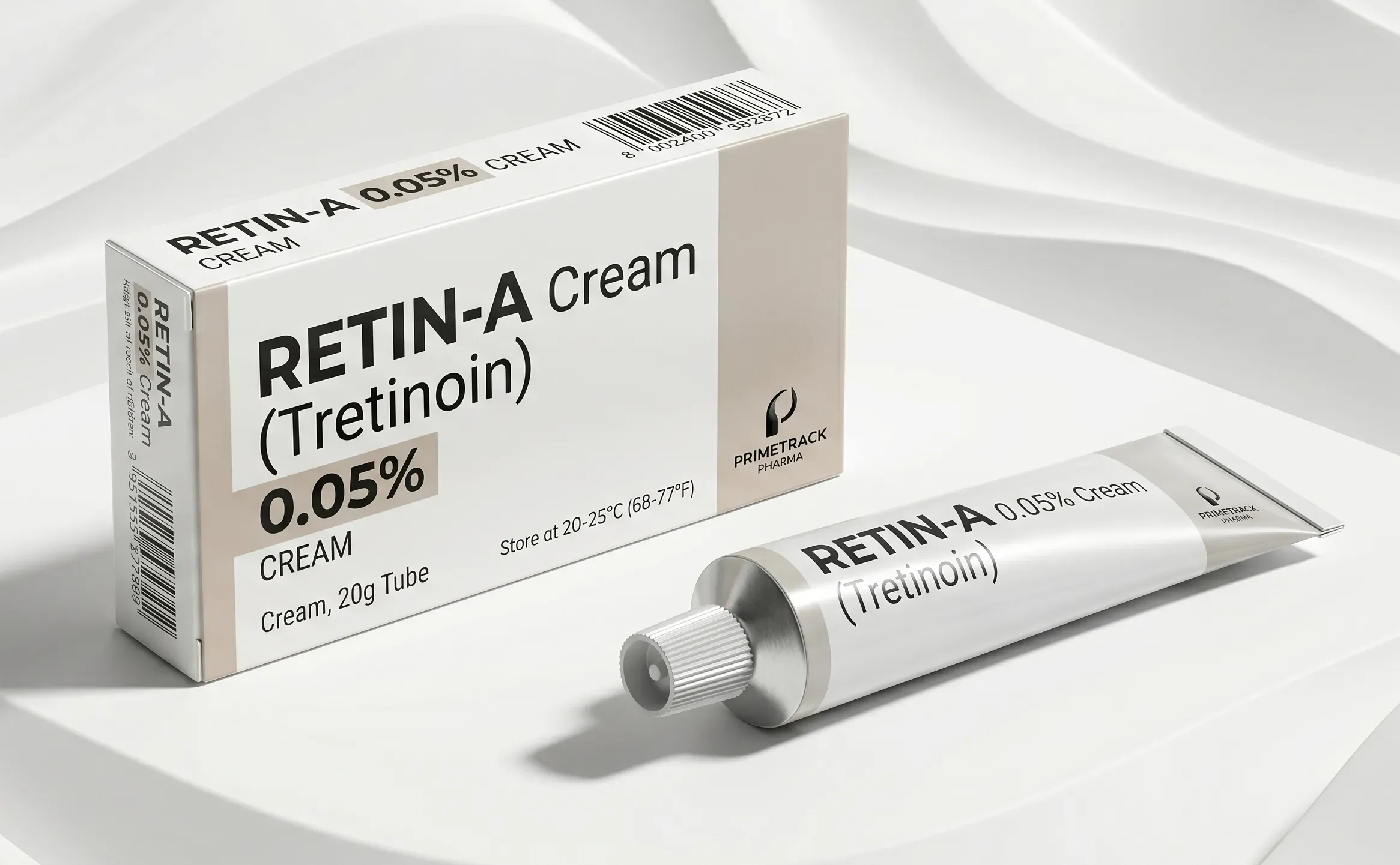
A cream for spots, an ointment for eczema, capsules for severe acne and a cream for facial hair. Line them up on one bathroom shelf and the names start to blur. What they do doesn’t.
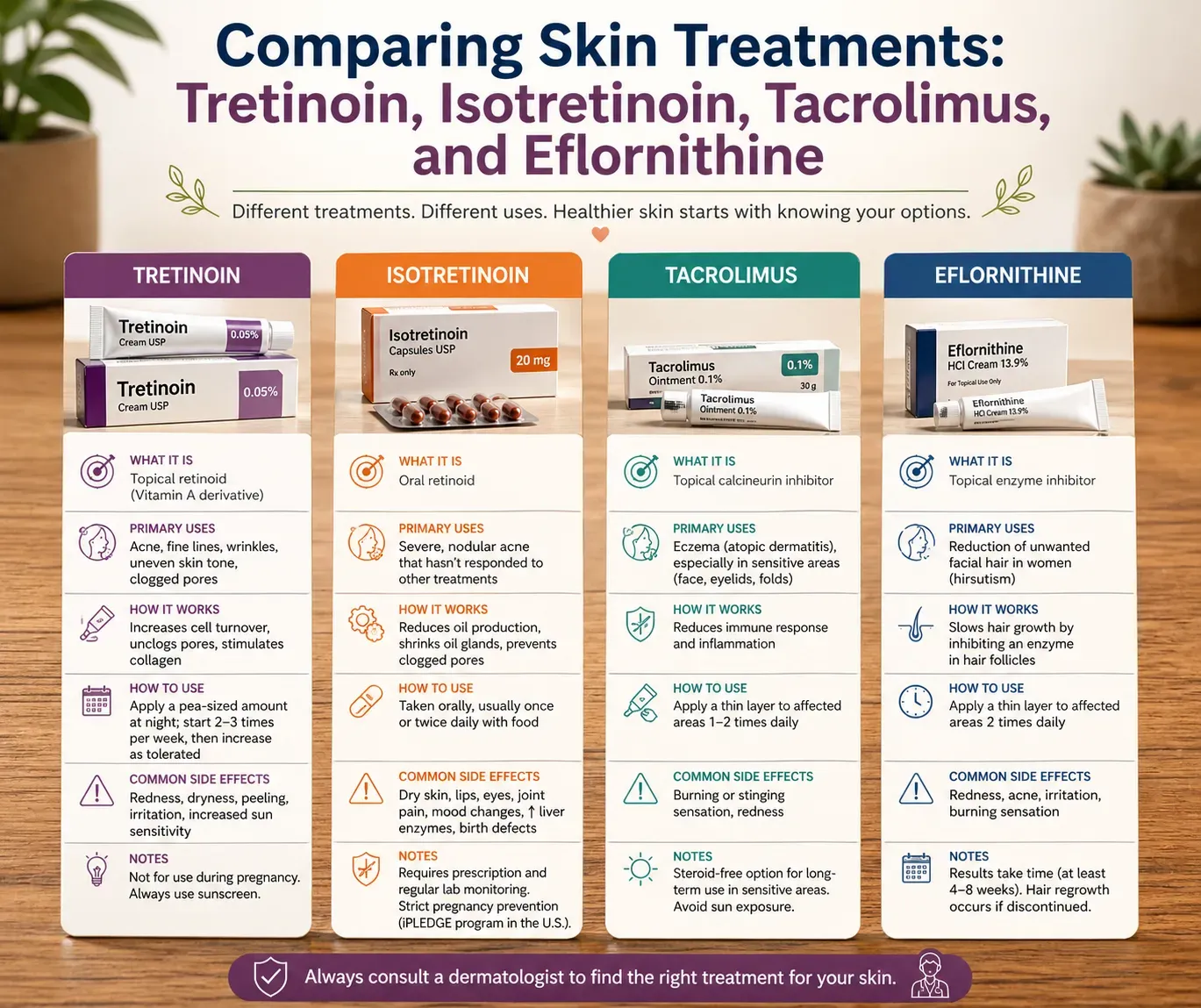
Tretinoin, isotretinoin, tacrolimus and eflornithine treat different problems. So there’s no winner here; we sort them by what they treat and what using them is actually like. The details follow Singapore’s patient information where it exists, and say so when they come from somewhere else.
Start with the problem, then the medicine
| Treatment | What it is and what it’s for | What makes the routine different |
|---|---|---|
| Tretinoin | A retinoid you put on your skin, for acne | A thin layer and a routine your skin can handle beat using more |
| Isotretinoin | Capsules for severe acne | Pregnancy precautions, blood tests and check-ins come with it |
| Tacrolimus | A non-steroid ointment for eczema | Strength, age and the flare versus maintenance plan all need checking |
| Eflornithine | A cream that slows unwanted facial hair in women | You have to keep using it to keep the slower growth |
Tretinoin: a routine your skin can live with
Tretinoin changes how skin cells grow and shed, which helps stop pores clogging. More doesn’t work faster; it just makes irritation harder to bear. HealthHub says to use a thin layer and keep it off broken skin and away from your eyes, mouth and nose. Some early irritation, or a short spell of worse acne, can happen. Severe or lasting irritation needs a review, though, not a shrug and the word “purging”. HealthHub tretinoin
It takes weeks. The real questions are whether you can keep the routine going and whether your skin looks better at the check-in you planned. Using it for wrinkles or pigmentation depends on the exact product and needs advice; it’s no reason to borrow acne medicine on your own.
Isotretinoin: not just a stronger cream
Isotretinoin cuts oil production and calms inflammation. For severe acne it can make a big, sometimes lasting difference, but it isn’t a guaranteed cure and acne can come back. The length of a course depends on you, so don’t hold yours up against a fixed number of months from an article. HealthHub isotretinoin
Dry lips, skin and eyes are the everyday nuisance. Lip balm, a plain moisturizer and advice about contact lenses if your eyes get sore can help. Those are a different matter from the pregnancy and wider safety issues further down.
Tacrolimus: a flare plan and a maintenance plan
Tacrolimus calms the immune signals in your skin. Protopic is an ointment, not a steroid cream. Singapore’s formulary lists 0.03% from age two and 0.1% from age 16, each with its own conditions and instructions. Don’t assume either strength suits any age. Singapore Protopic record
You may use it more often during a flare and less often for maintenance. The formulary describes short-term use and on-and-off longer-term use, not unlimited daily use forever. Once the eczema settles, ask whether to stop, use it now and then, or change the routine. Sticking to a flare schedule forever is a common slip, even when the ointment is clearly helping.
Eflornithine: slower growth, not hair removal
Eflornithine, sold as Vaniqa, blocks an enzyme that hair needs to grow. It slows growth; it doesn’t remove hair, so you’ll probably still shave, wax or thread.
The European Vaniqa information says you may see a difference within eight weeks, and if nothing has changed by four months it’s time to rethink. Keep using it to keep the effect; stop, and growth tends to drift back to how it was. That comes from the EU product information and doesn’t mean that pack is sold in Singapore right now. EMA Vaniqa information
Irritation is worth talking about
Peeling with tretinoin, dryness with isotretinoin, early stinging with tacrolimus, redness or bumps with eflornithine: any of these can decide whether you stick with it. Tell your prescriber if something is severe, won’t settle or gets in the way of your day. A painful rash isn’t proof that a product is working.
The shelf makes it harder. An exfoliant, a vitamin C serum and an acne cream might all have arrived the same week. Bring the names, strengths and how often you actually use them. Change several things at once and you’ll never find the culprit.
For tretinoin, the irritation guide picks up that conversation. A painful rash means get advice, not push through.
Symptoms that can’t wait for your next appointment
Trouble breathing or swelling of the lips, tongue or throat is an emergency. On isotretinoin, big changes in your vision, a severe headache, yellow skin or eyes, or a marked change in mood need prompt medical help. If you’re at risk of harming yourself, get urgent help now.
Pregnancy and other important checks
Isotretinoin needs its own safety plan
Isotretinoin can seriously harm an unborn baby. Singapore’s HealthHub describes using contraception for at least one month before, all the way through, and for at least one month after treatment. Go through the exact pregnancy-prevention and testing plan with your team. If you get pregnant during treatment, stop the capsules and call your prescriber straight away. Singapore precautions
Tell your team about other medicines and supplements. HealthHub specifically warns against vitamin A supplements and tetracycline antibiotics while you’re on isotretinoin. The cholesterol and liver blood tests are there for safety, not to measure how your acne is doing.
In the UK, guidance from January 2026 also puts weight on checking mental health and sexual function before and during treatment. That’s UK policy, and Singapore’s process may differ. If something new comes up, talk about it, without assuming the drug definitely caused it or definitely didn’t. MHRA update
Does tacrolimus thin the skin like a steroid?
Tacrolimus isn’t a steroid, which is partly why it’s useful on some delicate areas. That doesn’t make it unlimited: stick to the strength, the areas and the on-and-off plan. Ask your prescriber about the product’s long-term warnings, and mention any odd skin changes that hang around. Protopic product information
Sun, products and planned treatments
- Be sensible about sun. With these retinoids, HealthHub advises broad-spectrum SPF 30 or higher, covering up and avoiding long spells in direct sun. Sunburn is a risk, not a certainty every time you step outside.
- Fewer bottles. Glycolic toner, a salicylic cleanser and a retinoid in one week, and the face reacts? Nobody can say which one did it. Check with the pharmacist before you mix.
- Mention planned treatments. Tell the clinic you’re on isotretinoin before waxing, peels, laser or other skin procedures, and get a plan for that procedure rather than a waiting time from the internet.
- Ask about pregnancy even for a cream. Tretinoin cream and isotretinoin capsules need separate advice; don’t assume a cream is fine in pregnancy.
None of this means all four treatments thin the skin or share the same precautions. Each product has its own advice. HealthHub topical tretinoin, oral isotretinoin
Getting it in Singapore: consultation, tests and the product
Ask your prescriber or pharmacy to confirm the product, strength, quantity and whether it’s in stock. A medicine-information page doesn’t mean Guardian, Watsons or a particular clinic has it. For public care, check referral and subsidy rules with the hospital or polyclinic.
Ask for the full price in SGD, including the consultation and any tests, not just the cream or capsules. Don’t pick a treatment because some comparison quotes an undated “monthly cost”; the checks and supply can be very different.
What to bring to a skin appointment
Throw the products in a bag, or photograph the labels. Scribble on a scrap of paper how often each one really goes on (not how often it should), what’s new this month and what you’re struggling with. Selfies taken by the same window every few days are surprisingly useful. The doctor still needs to look at your actual skin. Ask what each treatment is for, when you’ll judge whether it’s working, and which symptoms mean you should get in touch sooner.
Lead with whatever is actually bothering you day to day: discomfort, the schedule, facial-hair removal or the cost of follow-ups. Tretinoin and irritation goes deeper on one of those.
What counts as progress?
Judge each treatment by its own goal: fewer spots, calmer and less itchy eczema, or shaving less often. Before-and-after photos in similar light help, alongside how you feel and how the routine is going.
No medicine is better across the board because it’s a tablet, a higher percentage or a brand you know. Those comparisons mix up different conditions, forms and goals.
What if I miss an isotretinoin dose?
HealthHub says to take it when you remember, unless your next dose is nearly due; never take two at once to catch up. Follow the instructions for your own product, and ask the pharmacist if you’re not sure.
Sources
Checked in October 2026.
- Topical tretinoin — Singapore HealthHub
- Oral isotretinoin — Singapore HealthHub
- Singapore Protopic formulary record
- Vaniqa — EMA
- Protopic — EMA
- MHRA January 2026 isotretinoin guidance. UK